|
Demon
Davey, the vicar of Altarnun and arch villain invites you
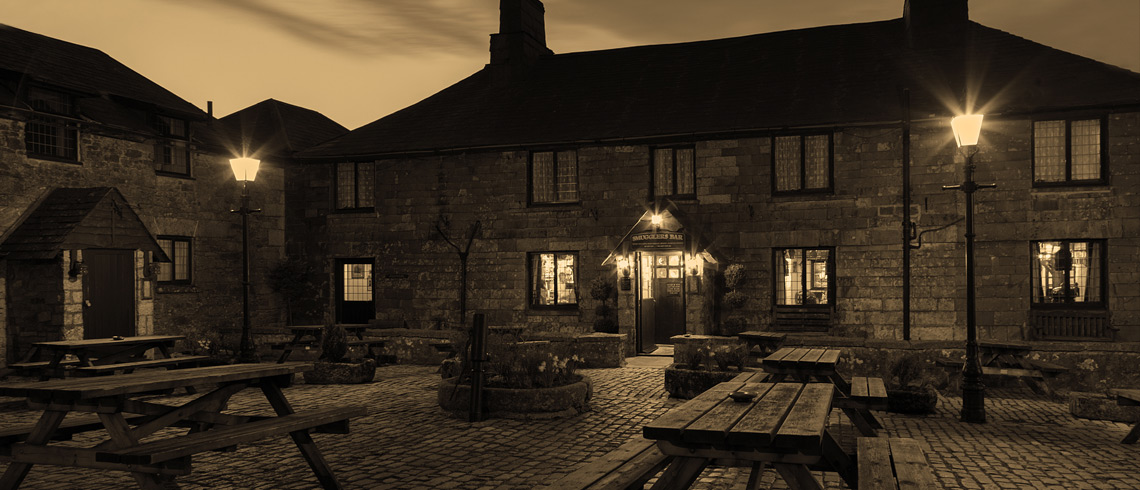
to the Jamaica Inn story, told in tableaux, light and sound.
Enter
into the evil yet romantic era of smuggling in Cornwall and
see what is probably the finest collection of smuggling artefacts
in the country. Smuggling
evolved when customs dues were first introduced in the thirteenth
century but there was no form of law and order until the fifteenth
century and even then it was negligible. Goods such as silks,
tea, tobacco and brandy were more frequently smuggled into
Cornwall than anywhere else in England.
Cornish
smugglers were not a violent breed, but very cunning.
A famous eighteenth century economist defined a smuggler
as: "a person who, though no doubt highly blameable
for violating those of natural justice and who would
have been in every respect an excellent citizen, had
not the laws of his country made that a crime which
nature never meant to be so". |

Smugglers move their contraband
|
So smuggling
became accepted and most took part in the proceedings - even
the revenue men were quite approachable to the odd bribe!

Cadgwith
|
Smuggling around the Cornish
coast was comparatively simple as there were few preventive
men to enforce the law and even when a smuggler was
caught, he was usually dealt with leniently by the presiding
magistrates, most of whom were willing recipients of
the smuggled goods.
|
| Polperro
on the south coast and Boscastle, Trebarwith and Tintagel
on the north coast were the most used landing coves
for bringing ashore contraband. Talland and Lanreath
were regularly used by Polperro smugglers to hide their
cargo. Jamaica Inn, in its isolation, provided the ideal
premises for storing this contraband on its way up country.
|

Boscastle
|
|